
Hue, located alongside the Perfume River, was the last imperial capital of Vietnam. The city is characterized by its citadel, royal tombs, and unique urban atmosphere. This guide explores the city's key landmarks, nearby villages, and coastal areas, and provides practical information for planning an organized visit.
1. Introducing Hue - Vietnam’s Former Imperial Capital
Hue evolved to the political and ceremonial heart of Vietnam during the Nguyen Dynasty, which lasted from 1802 to 1945. The city’s layout reflects deliberate imperial planning. Palaces, temples, and administrative compounds were organized according to geomantic and feng shui principles, with the Perfume River serving as both a natural axis and a symbolic boundary.
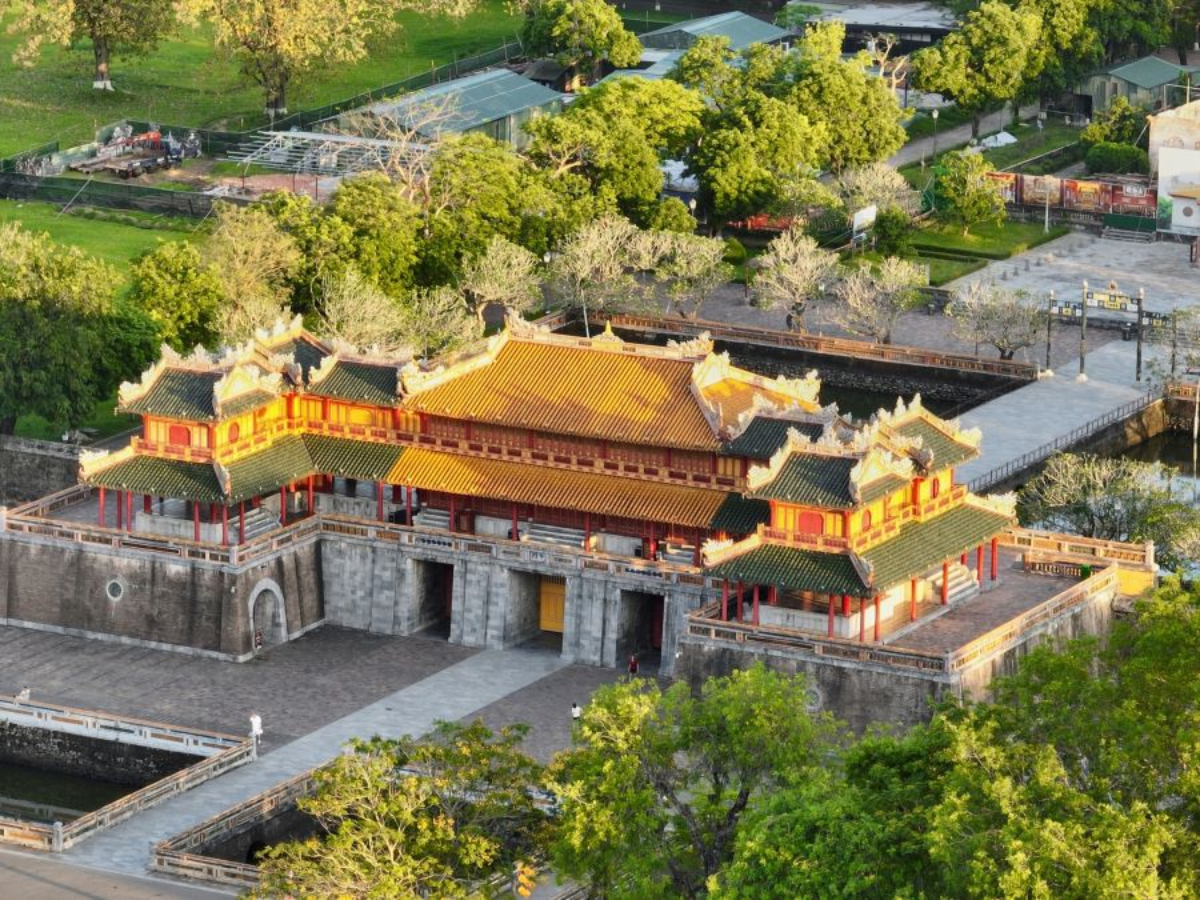
The Imperial City forms the architectural core. High ramparts, moats, and layered gates create a spatial hierarchy that mirrors court protocol. Movement inward once meant increasing proximity to authority. Even today, the citadel's structure reveals how governance, ritual, and daily life were organized around a strict ceremonial order.
Beyond the fortified walls, Hue unfolds along the riverbanks in a more measured manner. The royal tombs are strategically located within the surrounding hills, serving not only as burial sites but also as integral parts of the landscape. Villages developed near imperial institutions, providing artisans, scholars, and servants to the royal household. The connection between the river, architecture, and countryside is evident in the city’s scale and pace.
In contrast to Vietnam’s larger commercial centers, Hue exudes a more restrained atmosphere. Traffic is lighter, streets are wider, and the skyline remains low. This lack of vertical density enhances the sense of continuity with the city’s imperial past. Rather than overwhelming visitors with grand spectacles, Hue offers a richly layered historical environment that unfolds through its structures, history, and culture.
2. Top sights to visit in Hue
2.1. The Imperial City (The Citadel)
At the core of Hue stands the Citadel, the political and ceremonial center of the Nguyen Dynasty between 1802 and 1945. This walled complex forms part of the UNESCO-listed Complex of Hue Monuments, recognized in 1993 for its historical and architectural significance.
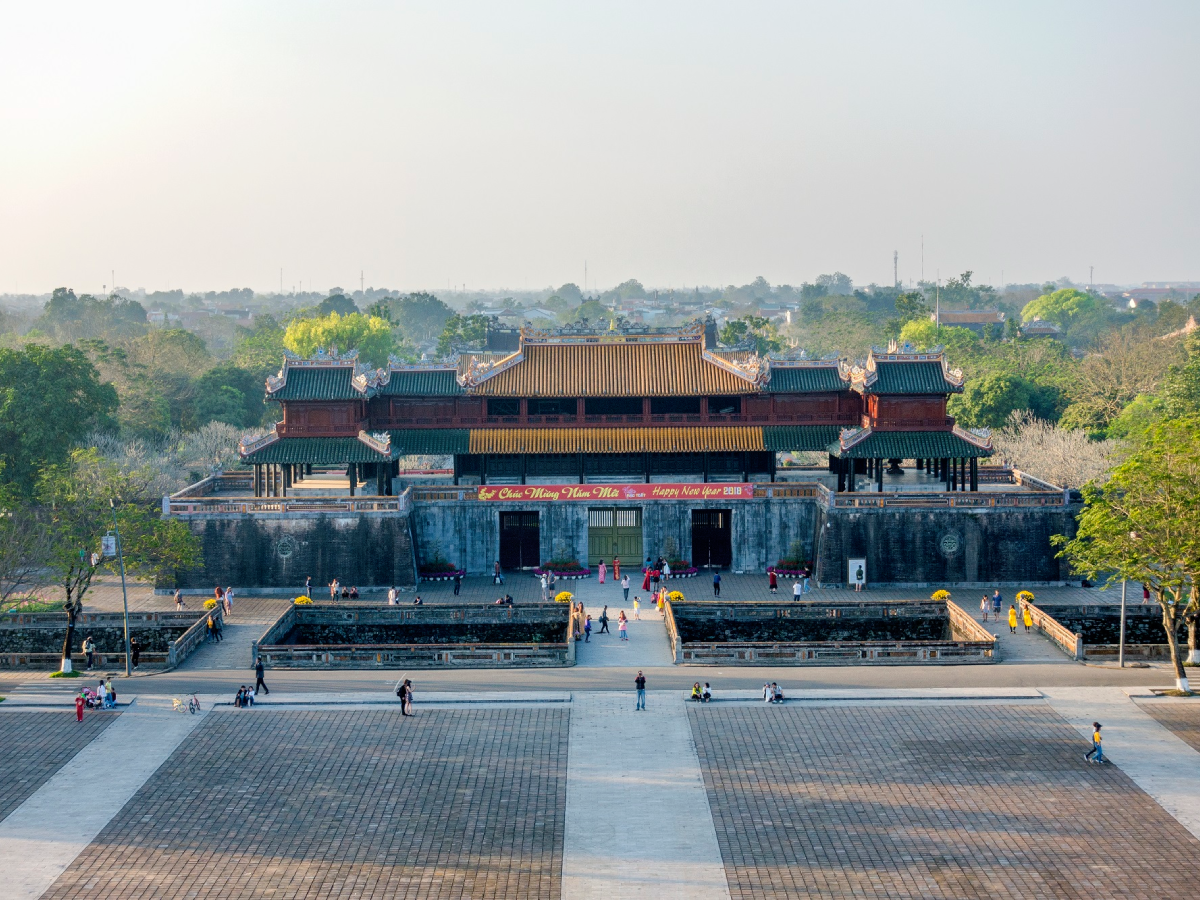
The citadel occupies a vast rectangular footprint, enclosed by brick ramparts and a wide moat. The Ngo Mon Gate leads to the Thai Hoa Palace, where coronations and major court ceremonies once took place. The spatial arrangement is deliberate: gates, courtyards, and halls align along a central axis, reinforcing hierarchy and imperial protocol through proportion and distance.
Large sections were damaged during the mid-20th century, and restoration remains ongoing. Some buildings appear fully reconstructed, others retain visible traces of conflict. The contrast between restored timber halls and open foundations gives a clearer sense of scale than a fully intact complex would have.
Opening hours generally run from 8:00 am to 5:30 pm, with slight seasonal adjustments. The standard entrance ticket is approximately 200,000 VND for adults. A combined ticket covering several royal tombs is also available and can be cost-effective for visitors planning multiple sites.
Allow at least half a day if you intend to move beyond the main axis and explore side courtyards, temples, and reconstructed residences. Early morning entry reduces heat and crowd density, particularly during peak domestic travel periods. The site is expansive; measured pacing makes a noticeable difference.
2.2. Descend into Hue’s Royal Tombs
The royal tombs of Hue extend the story of the Imperial City into the surrounding landscape. Commissioned during each emperor’s lifetime, these complexes were conceived as places of reflection and authority, blending architecture with hills, water, and vegetation. Visiting them reveals distinct visions of power and legacy.
Minh Mang Tomb
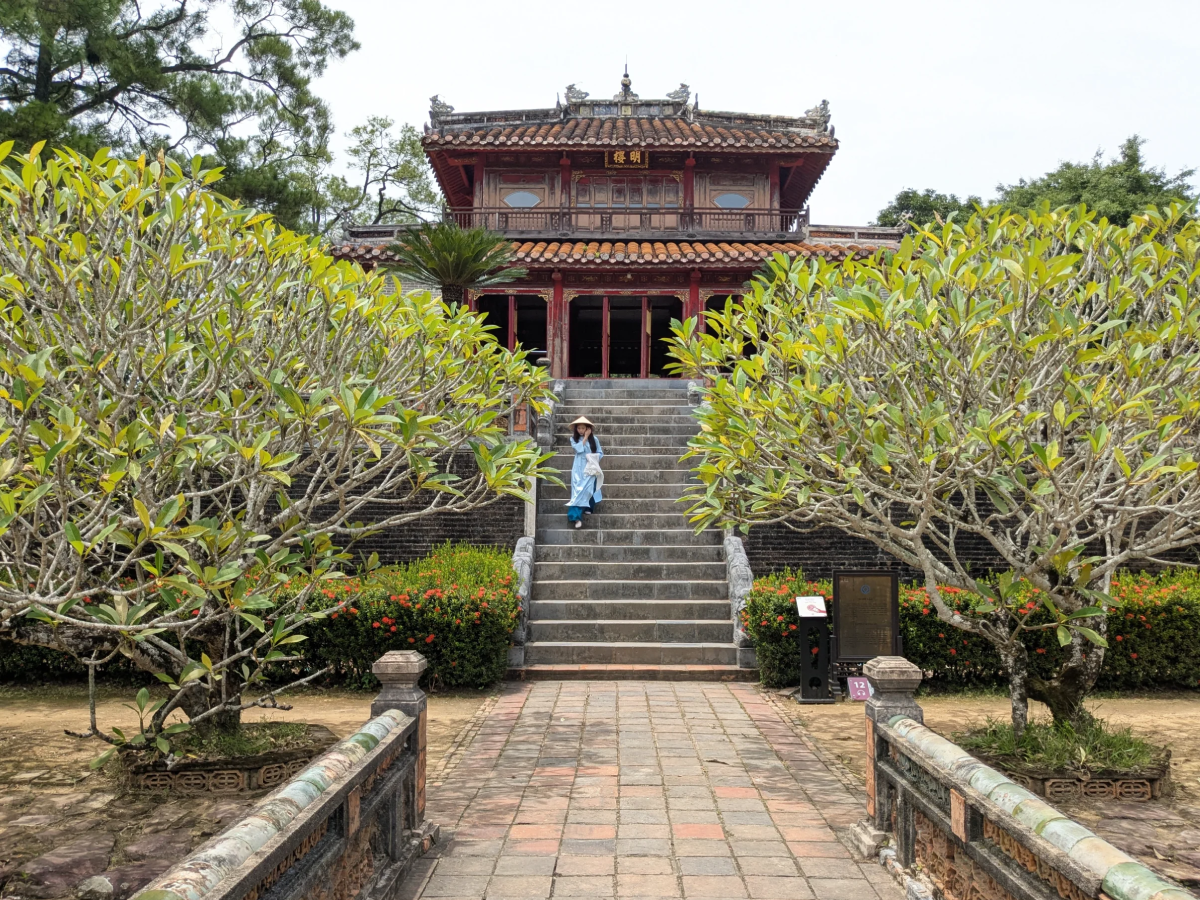
The Minh Mang Tomb is a majestic 18-hectare complex, on the west bank of the Perfume River, 12 km from Hue. It serves as the final resting place for King Minh Mang, the second emperor of the Nguyen Dynasty. The tomb is renowned for its strict symmetry, Confucian design, and harmonious integration of nature, architecture, and water features. This tomb was planned during Minh Mang’s reign (1820-1840) but constructed by his successor, King Thieu Tri, between 1840 and 1843. It exemplifies a "balanced" aesthetic and comprises over 40 structures, including temples and pavilions, designed to resemble a person in a restful pose.
Tu Duc Tomb
The Tu Duc Tomb was constructed between 1864 and 1867. It is the most popular and impressive royal mausoleum, celebrated for its poetic, romantic landscape and harmonious integration with nature. Highlights include the serene Luu Khiem Lake, the massive 20-ton stone stele in the Stele Pavilion, the ancient Minh Khiem theater, and lush pine forests, offering a quiet, harmonious retreat that reflects the emperor's refined, literary taste.
Khai Dinh Tomb
Khai Dinh’s mausoleum stands apart in both material and tone. Constructed in the early twentieth century, it incorporates European decorative influence alongside traditional imperial motifs. The exterior rises in layered terraces of stone and concrete.
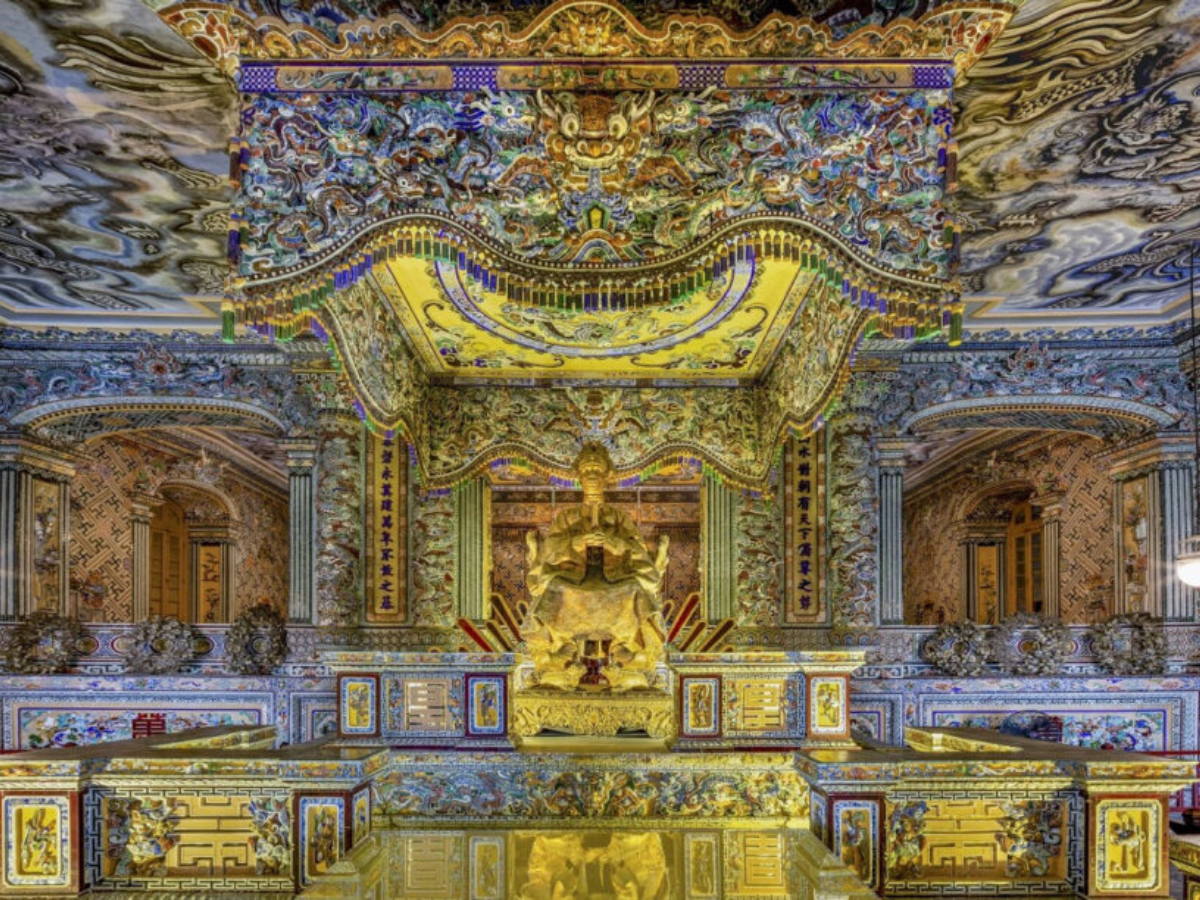
Inside the main hall, ceramic mosaics and painted ceilings form a dense decorative interior that contrasts sharply with earlier tombs. The compressed spatial scale and ornate detailing create a markedly different impression from Minh Mang’s disciplined layout or Tu Duc’s openness.
Gia Long Tomb
Located 16 kilometers from the city, this tomb is remote and rarely visited, making it an ideal destination for those with a sense of adventure. The journey to the tomb enhances the experience, as you pass by some of Hue's most captivating rural sights, including overgrown graveyards and vibrant Buddhist monasteries.
Gia Long was the first Nguyen king and one of Vietnam's most significant historical figures. He reinforced Confucian values, moved the capital from Hanoi to Hue, began construction on the Hue Citadel, and even coined the country's name: "Việt Nam." The tomb itself is expansive, consisting of various structures spread across the lush countryside.
A combined ticket covering the Imperial City and the major tombs typically costs around 420,000 VND. Individual entry typically costs approximately 150,000 VND per site. Most tombs open in the morning and close in the late afternoon, with slight seasonal adjustments.
Selecting two tombs that contrast in design often provides a clearer architectural perspective than visiting all four in quick succession.
2.3. Beyond the Citadel: Secondary Historic Sites
Beyond the main imperial monuments, Hue contains smaller historic sites that reveal later chapters of its political and social history. These locations receive fewer organized tours yet provide useful context for understanding the city beyond dynastic symbolism.
An Dinh Palace
Located on the southern bank of the Perfume River, An Dinh Palace served as a private residence for members of the Nguyen royal family during the early twentieth century. Unlike the timber-heavy architecture of the Imperial City, this structure reflects European influence in both façade treatment and interior decoration.
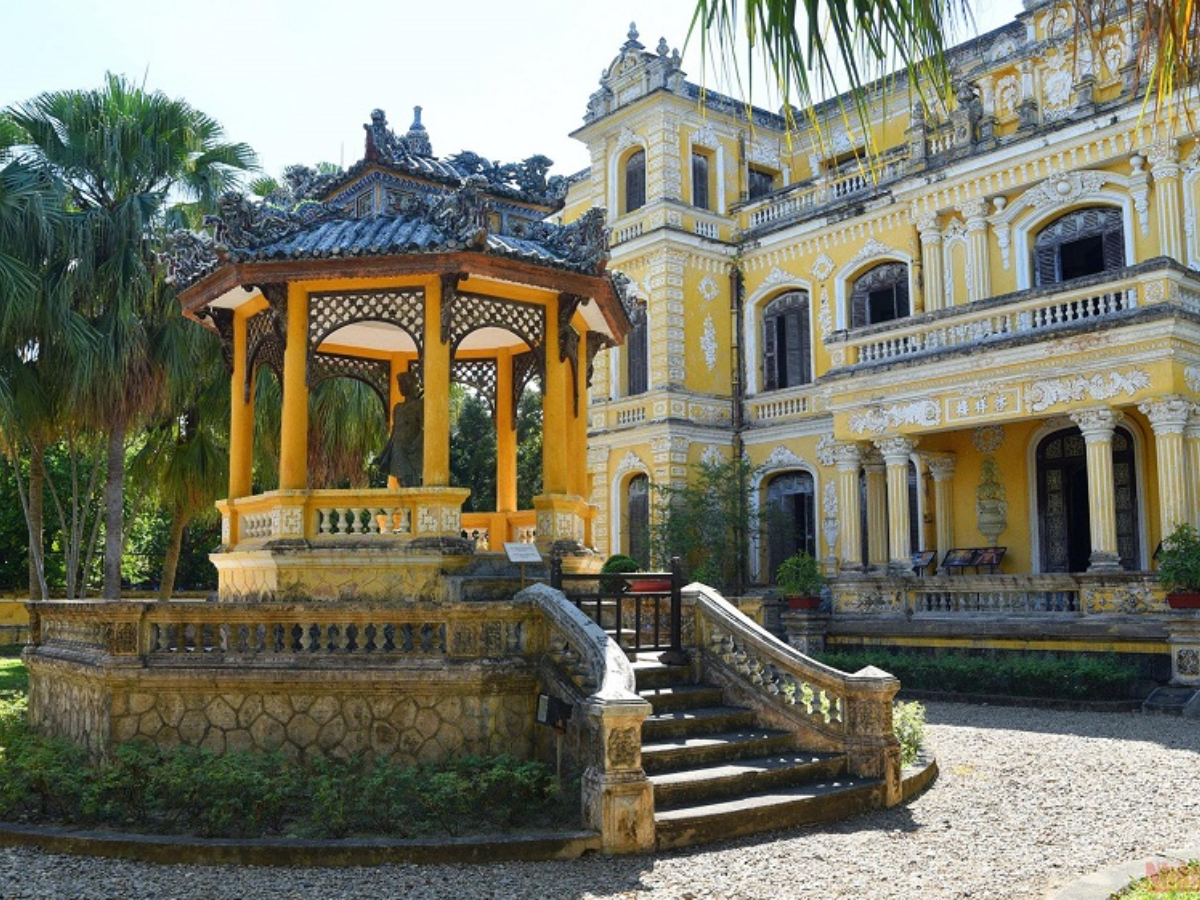
The exterior presents a neoclassical composition with decorative reliefs and pastel tones. Inside, restored reception halls display painted ceilings, ornate staircases, and mural work that illustrate the period’s stylistic transition. Damage sustained during mid-twentieth-century conflicts has been partially repaired, and ongoing restoration remains visible in certain sections.
The site requires less time than the Imperial City or royal tombs, often under one hour. Its compact scale and architectural contrast make it a practical addition for visitors interested in the final phase of the Nguyen dynasty.
An Bang Cemetery (“City of Ghosts”)
An Bang Cemetery is a well-known cemetery situated in the fishing village of An Bang, located 35 kilometers east of Hue city in Vietnam. Referred to informally as the "City of Ghosts," it is regarded as the most luxurious and magnificent cemetery in Vietnam. The site features thousands of tombs in various colors and sizes, some valued at billions of VND (equivalent to hundreds of thousands of US dollars). Elaborate tomb structures, built by overseas Vietnamese families, are clustered closely together, showcasing a blend of Buddhist symbolism, imperial motifs, and contemporary materials. The decorative elements include tiled dragons and reinforced concrete domes. The cemetery spans approximately 250 hectares and lies adjacent to a pristine, deserted sandy beach.
It is good to plan a visit to this cemetery on the way from Hue to Hoi An, or to combine it with a visit to Thuan An Beach for a half day.
2.4. Thanh Toan Bridge
Thanh Toan Bridge is located in Thuy Thanh commune, about 8 kilometers from the historic city center. It is surrounded by scenic rice fields and lush landscapes, providing a peaceful escape.
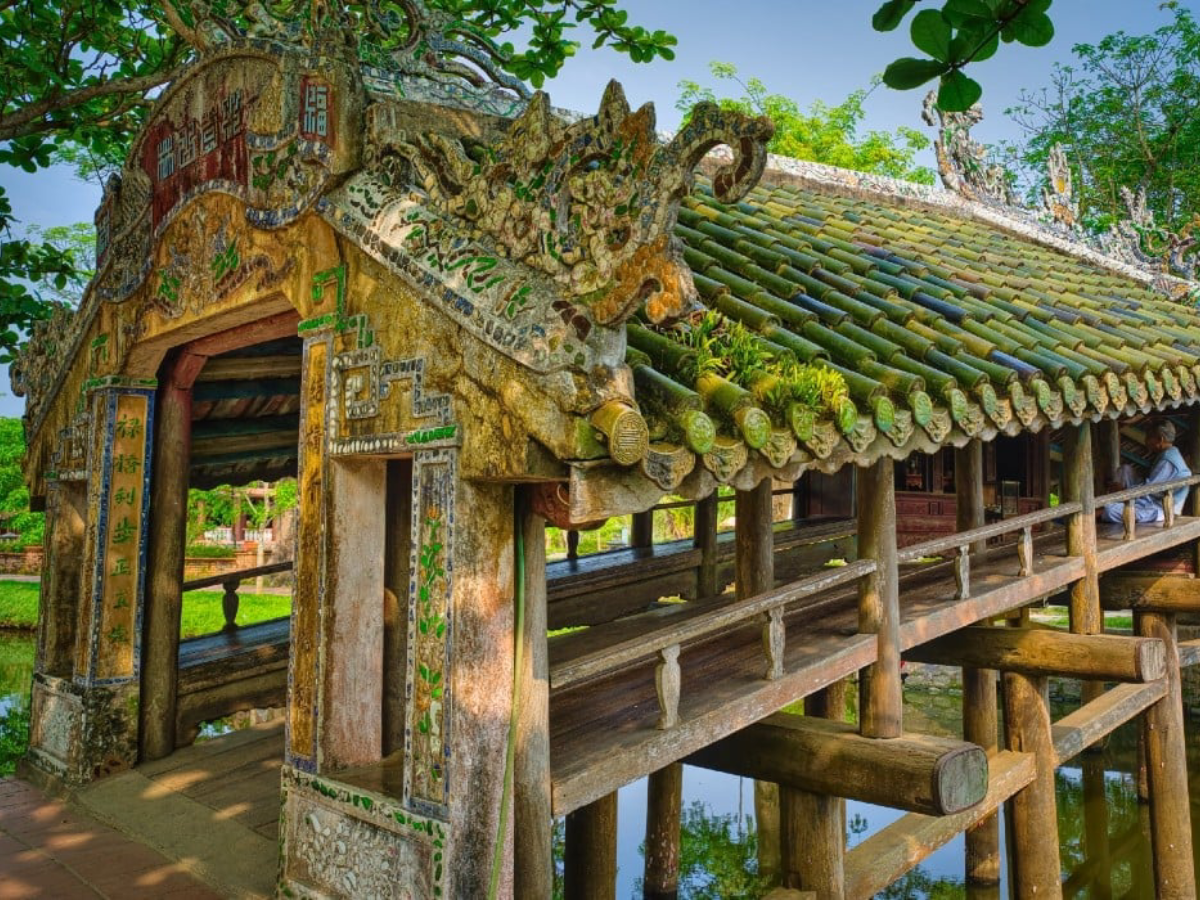
What makes the Thanh Toan Bridge unique is its tile-roofed architecture. This entirely wooden bridge features a curved, roofed structure supported by large wooden beams and columns. The roof is covered with traditional ceramic tiles, giving the bridge its iconic appearance.
The bridge's design reflects the classical Vietnamese architectural style of the late 18th century, skillfully combining beauty and practicality. The roof was constructed to protect pedestrians and goods from the elements, especially during the monsoon season, when heavy rain is common in the region.
Decorative elements of the bridge include intricate carvings and motifs that represent Vietnamese folklore and culture. The structure is elevated above the water, allowing boats to pass beneath, while its simple yet elegant design enhances the scenic view of the surrounding fields.
Visitors can reach the bridge by motorbike or car, or by taking a traditional cyclo ride, which offers a charming way to experience the countryside
2.5. Thien Mu Pagoda
Standing on Ha Khe Hill along the northern bank of the Perfume River, Thien Mu Pagoda has anchored Hue’s spiritual landscape since 1601. Established during the rule of Nguyen Hoang, it predates the imperial capital and reflects the early consolidation of political and religious authority in the region.
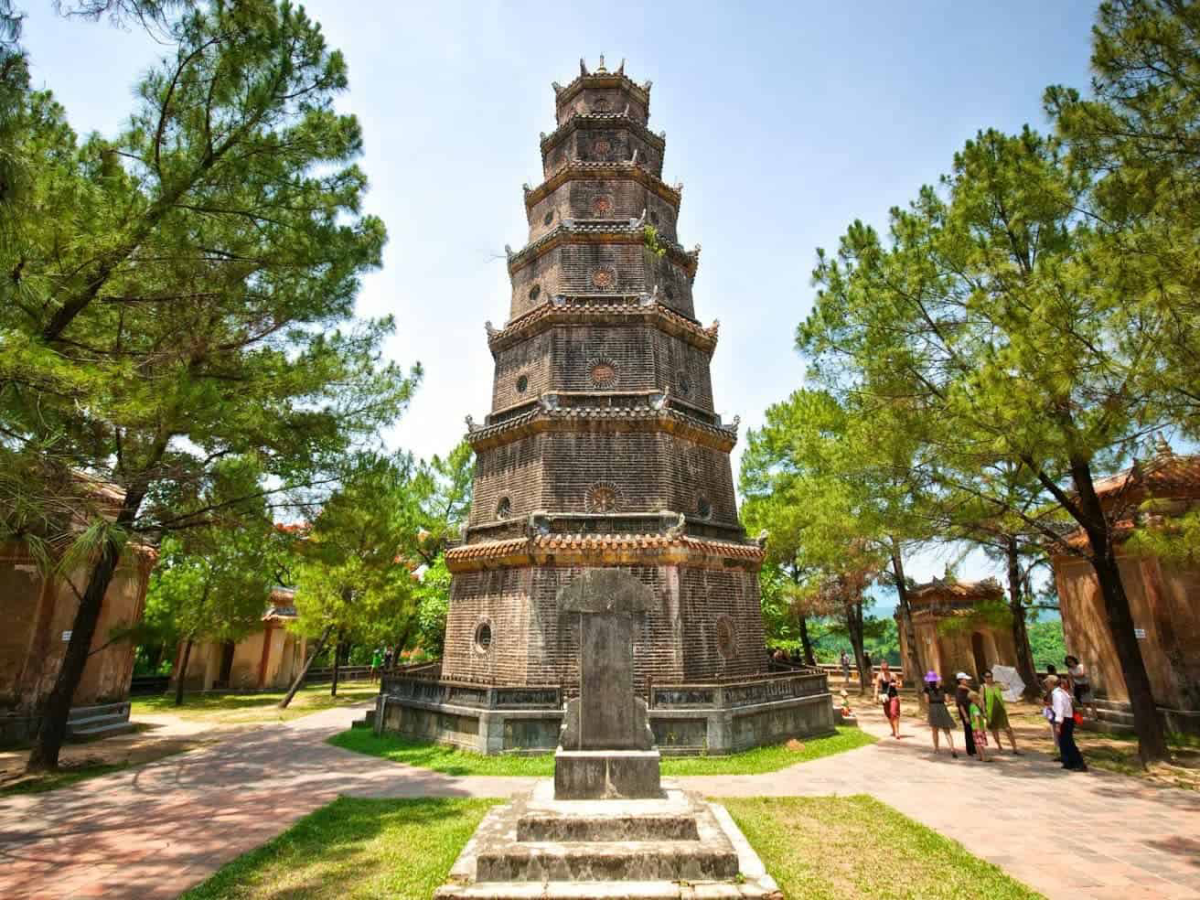
Its defining feature, the seven-tiered Phuoc Duyen Tower built in 1844 under Emperor Thieu Tri, functions as both an architectural marker and a symbolic statement. Rising in measured vertical stages, the tower introduces a clear focal point visible from the river. For centuries, boats approaching Hue would first encounter this silhouette before the citadel walls, reinforcing the pagoda’s role as a visual threshold to the city.
The broader temple grounds extend behind the tower, with prayer halls, monks’ quarters, and garden courtyards arranged along the slope. Monastic life continues on site, preserving the pagoda’s active religious function rather than reducing it to heritage display. The preserved Austin car associated with the monk Thich Quang Duc links the pagoda to twentieth-century political history, embedding it within national memory beyond the imperial era.
Located approximately 5 kilometers from central Hue, the site can be reached by road or by boat along the Perfume River. Entry is free, though respectful attire is expected.
Thien Mu endures not because of scale, but because of position. Its placement at a bend in the river, combined with four centuries of continuous religious presence, has made it one of the most enduring symbols of Hue’s identity.
2.6. Lang Co Beach
Lang Co Beach lies roughly 60 kilometers south of Hue, stretching across a crescent-shaped bay where the mountains descend close to the shoreline. This compressed geography gives the area its recognizable form: a long, clean arc of sand facing open water, backed by green slopes rather than an urban skyline.
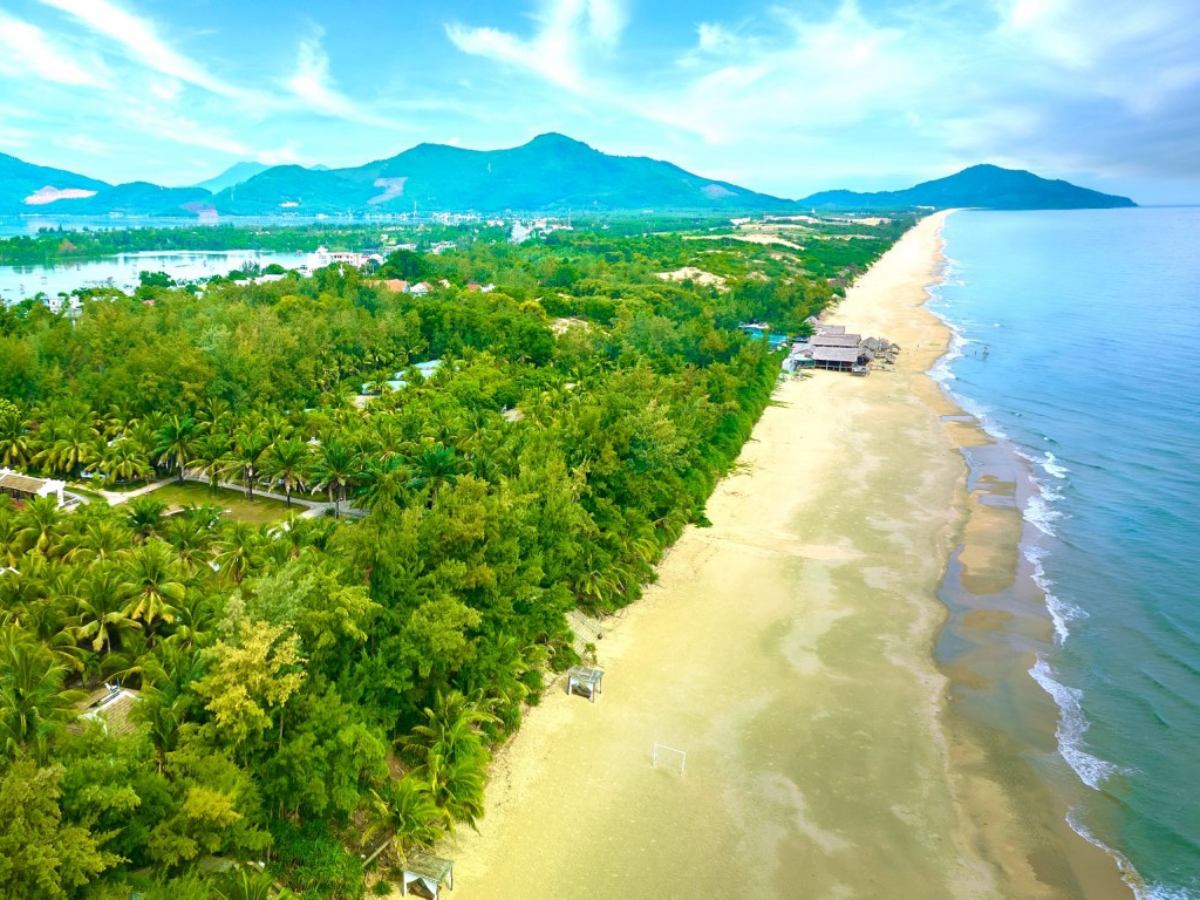
The shoreline here remains relatively undeveloped. Fishing boats are pulled directly onto the sand in certain sections, and small seafood eateries operate close to the main village road. The absence of high-rise density changes the visual rhythm of the beach; horizons remain wide and unobstructed.
Water conditions are typically calmer between April and August, with a gradual slope suitable for swimming. Outside this period, currents can strengthen and sandbanks shift. The light in late afternoon tends to cast a muted tone across the bay, with mountain shadows extending toward the waterline.
Lang Co does not function as a resort strip. It serves better as a coastal extension to a Hue itinerary - a place to pause for sea air and open space before returning inland to the imperial and river landscapes that define the region.
2.7. Thuan An Beach
Thuan An Beach, located within Phu Vang District, is just a short 15-kilometer journey east of Hue City center. This coastal gem is situated where the Huong River meets the East Sea, creating a unique setting between river and ocean. It offers a refreshing break from the typical attractions in Hue. While many tourists flock to more well-known beaches like Lang Co and My Khe, Thuan An Beach stands out for its tranquility, accessibility, and local charm. Here, you can immerse yourself in an authentic atmosphere, watching fishermen mend their nets or savoring fresh seafood right on the shore. More than just a beach, Thuan An Beach provides an experience that connects you to the essence of central Vietnam.
2.8. Bach Ma National Park
Leaving Hue’s low-lying river plains behind, the road to Bach Ma climbs steadily into cooler air and denser forest. At over 1,400 meters above sea level, Bach Ma forms a climatic divide between the coast and inland highlands. Cloud cover can roll across the slopes within minutes, altering visibility and light conditions. On clear days, Hai Vong Dai viewpoint reveals a rare dual perspective - sea in one direction, mountains in the other, reinforcing the park’s position between ecosystems.
The hiking trails vary in intensity. The route to Do Quyen Waterfall involves descending stone steps through thick vegetation before reaching a steep drop framed by forest canopy. The Five Lakes (Ngu Ho) trail leads to a sequence of natural pools carved into rock, offering short pauses rather than extended swimming stops.
Infrastructure remains minimal. Facilities are concentrated near the summit, and independent trekking requires basic preparation, especially during wetter months when paths can become slick. The park does not cater to casual sightseeing; it rewards those willing to commit time and physical effort.
Bach Ma expands Hue vertically. After days spent navigating citadels, tombs, and riverbanks, the ascent into mountain terrain repositions the region within a broader ecological frame.
2.9. Dam Chuon & Tam Giang Lagoon
Stretching across a vast brackish water system east of Hue, Tam Giang Lagoon forms one of the largest lagoon networks in Southeast Asia. Dam Chuon is one of its most accessible sections, located roughly 12–15 kilometers from the city center and connected by low-lying roads that cut through fishing villages and aquaculture zones.
Unlike open-sea coastlines, the lagoon presents a shallow, calm surface shaped by tidal exchange and seasonal freshwater inflow. Wooden stakes mark fishing grids across the water, forming geometric patterns that shift with light and water level. Boats move slowly between these structures, collecting nets or transporting small catches back to shore.
Boat trips operate informally through local fishermen, often lasting one to two hours. Cycling routes along the embankments offer a land-based alternative, passing shrimp ponds, stilt houses, and narrow canals. Infrastructure remains modest, and visits tend to be low-key rather than staged.
2.10. Kim Long Ancient Village
Located along the northern bank of the Perfume River, just west of the Imperial City, Kim Long once served as a residential quarter for mandarins and members of the royal court. Large garden houses define the village layout. Traditional wooden structures sit behind brick gates, enclosed by orchards and courtyards. Many compounds follow principles associated with feng shui, balancing water access, tree cover, and directional alignment.
Cycling or walking through Kim Long reveals a quieter rhythm than central Hue. Narrow lanes curve between high garden walls, occasionally opening to reveal tiled roofs and carved wooden façades. Some ancestral houses remain private residences, while a few welcome visitors by appointment.
Kim Long provides context for understanding how Hue’s court culture extended beyond palace walls into residential planning and landscape design.
2.11. Thuy Bieu Village
Across the river from the Imperial City, Thuy Bieu offers a more compact, accessible village experience. Known historically for its garden houses and pomelo orchards, the area blends residential life with small-scale tourism.
Cycling routes wind past family shrines, communal houses, and fruit gardens. Cooking classes and home-based workshops operate within garden compounds, offering structured engagement without removing the setting from its local character.
Thuy Bieu works well as a half-day extension from central Hue. Its proximity allows flexible timing, and the scale remains manageable without requiring extensive transport planning.
5. Cuisine of Hue: Courtly precision and local depth
Hue’s culinary identity developed under court influence, yet it extends far beyond palace kitchens. The former imperial capital cultivated refinement in presentation and balance, even in modest street dishes. Portion sizes often remain smaller, seasoning is more deliberate, and plating is more structured than in other regions of Vietnam.
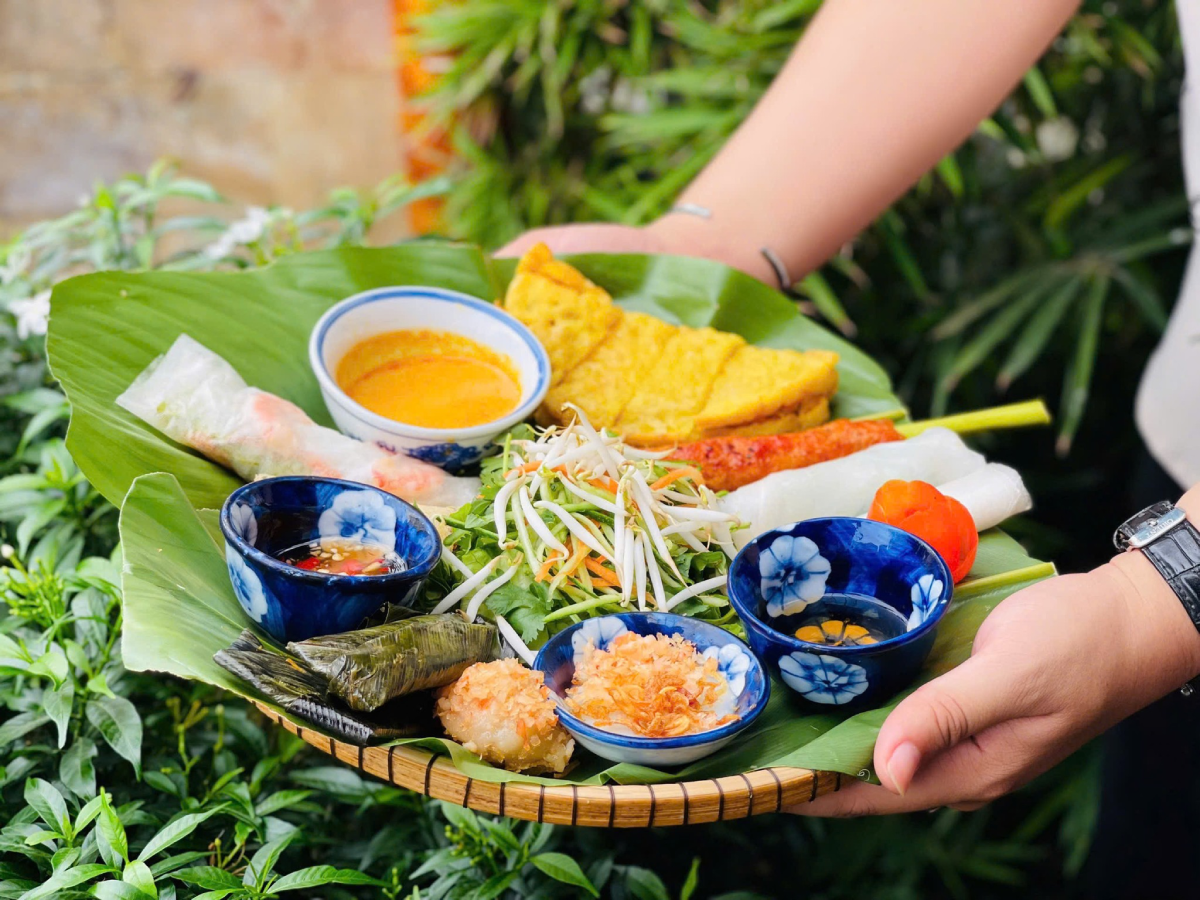
Royal cuisine historically emphasized visual symmetry and multiple small courses. While elaborate banquet menus now appear mostly in curated settings, the aesthetic discipline persists in everyday food culture. Garnishes are arranged carefully, dipping sauces adjusted with precision, and textures layered intentionally.
Hue’s food culture reveals itself through dishes like:
Bún bò Huế: A robust beef noodle soup distinguished by lemongrass aroma and chili-infused broth. Unlike northern pho, the broth carries deeper spice and a thicker mouthfeel, often including pork hock and congealed blood cubes.
Bánh bèo, Bánh nậm, Bánh bột lọc: Steamed rice-based cakes served in small portions, topped with shrimp floss or wrapped in banana leaf. served hot with a small bowl of dipping sauce consisting of fish sauce and garlic.
Cơm hến: A humble rice dish with baby clams, herbs and toasted rice crumbs, rooted in riverside communities rather than royal kitchens.
Nem lụi: Grilled pork skewers shaped around lemongrass stalks, eaten with fresh herbs and rice paper.
Chè Huế: A wide variety of sweet soups and puddings, often served in small glasses with contrasting textures.
Spice levels in Hue tend to run higher than in Hanoi, with chili paste appearing in broths and dipping sauces. Fish sauce also carries a sharper edge, reflecting central Vietnam’s coastal and lagoon influences.
Dining in Hue is less about grand restaurants and more about small establishments specializing in a single dish perfected over decades. Many reputable vendors operate from modest storefronts or residential spaces, particularly in the evenings.
Visitors interested in understanding Hue beyond its monuments should allow time to eat slowly and deliberately. Sampling several small dishes across different neighborhoods often provides more insight than a single large meal. Morning markets, modest noodle shops and long-established family eateries reveal layers of culinary continuity that formal dining rooms cannot replicate.
For travelers planning a structured itinerary, combining food exploration with walking routes through the Old Quarter or riverside villages creates a more cohesive experience of the city’s character.
6. Hue Weather and the best time to visit
Hue’s climate carries a distinct personality. Rain can linger for days, rivers swell quickly, and humidity shapes the rhythm of daily life. Choosing the right season has a visible impact on how the city unfolds.
March - August: Clearer skies and fuller itineraries This period offers the most reliable conditions for combining heritage sites with outdoor excursions. The Imperial City, royal tombs, and coastal stretches such as Lang Co are easier to navigate under stable weather. Heat intensifies between June and August, often surpassing 34°C, making early departures more practical for extended sightseeing.
September - November: The long rains Hue’s rainy season is not limited to brief showers. Rain can persist for hours or days, occasionally leading to localized flooding along the Perfume River and low-lying neighborhoods. While monuments remain accessible, lagoon boat trips, Bach Ma hikes, and beach outings depend heavily on daily forecasts. The city feels quieter, with softer light and fewer tour groups.
December - February: Cooler air, muted light Temperatures generally range between 18-24°C. Overcast skies and intermittent drizzle are common, yet walking conditions remain comfortable. This period suits travelers who prioritize architecture, museums, and culinary exploration over coastal activities.
Hue does not offer a single “perfect” season. The drier months allow broader movement across landscapes, while cooler periods create a more subdued atmosphere within the city’s historic core. Aligning expectations with weather patterns makes a noticeable difference in pacing and overall experience.
7. How to get to Hue
Hue is well connected by air, rail, and road, with access centered around Phu Bai International Airport and Hue Railway Station.
By air
Phu Bai International Airport (HUI) sits roughly 15 kilometers south of the city center. Direct domestic flights operate daily from Hanoi and Ho Chi Minh City, with a flight time of about one hour. Limited international routes operate seasonally or via connection through Hanoi or Ho Chi Minh City.
Taxi transfers to central Hue typically take 25-30 minutes. Pre-arranged airport transfers provide more predictable pricing than on-arrival negotiations.
By train
Hue Railway Station lies close to the city center, making rail travel one of the most convenient options. The north–south Reunification Express line connects Hue with Hanoi and Ho Chi Minh City.
The stretch between Da Nang and Hue is widely regarded as one of Vietnam’s most scenic rail segments, passing along coastal cliffs near the Hai Van Pass. Travel time between Da Nang and Hue averages 2.5-3 hours.
Overnight trains are available on longer routes, though cabin comfort varies depending on ticket class.
By road
Hue connects to Da Nang via National Highway 1A or the Hai Van Tunnel, with travel time of approximately 2-3 hours, depending on traffic. Private car transfers are common and allow flexible departure times.
Buses operate regularly between Hue, Da Nang, and Hoi An, though comfort levels differ significantly between operators. For travelers combining central Vietnam destinations, Hue integrates easily into a north–south route linking Hanoi, Phong Nha, Da Nang, and Hoi An.
8. Conclusion
Hue holds a different position within Vietnam’s urban landscape. Its identity rests on continuity - a former imperial capital where architecture, landscape and court tradition remain legible within the present-day city. The scale feels measured, the rhythm more restrained, and the connection between monument and environment unusually intact.
For those planning a journey through central Vietnam, Go-indochina can help shape an itinerary that aligns Hue’s imperial heritage, surrounding countryside and coastal landscapes into a cohesive experience - ensuring your time in Vietnam’s former capital feels deliberate, balanced and fully realized.