
My Son Sanctuary is one of Vietnam’s most important Cham heritage sites, yet you may still wonder what a visit there actually feels like. This guide breaks down the ancient brick towers, the on-site atmosphere, and key practical details to help you decide whether the ruins are worth your time.
1.My Son Sanctuary at a Glance
My Son Sanctuary is a protected archaeological site in central Vietnam, located in a quiet valley in Quang Nam province (now part of Da Nang). Once the spiritual heart of the Champa Kingdom, it served as a religious center for Hindu ceremonies between the 4th and 13th centuries. In 1999, the site was recognized by UNESCO as a World Heritage Site for its historical and cultural value.
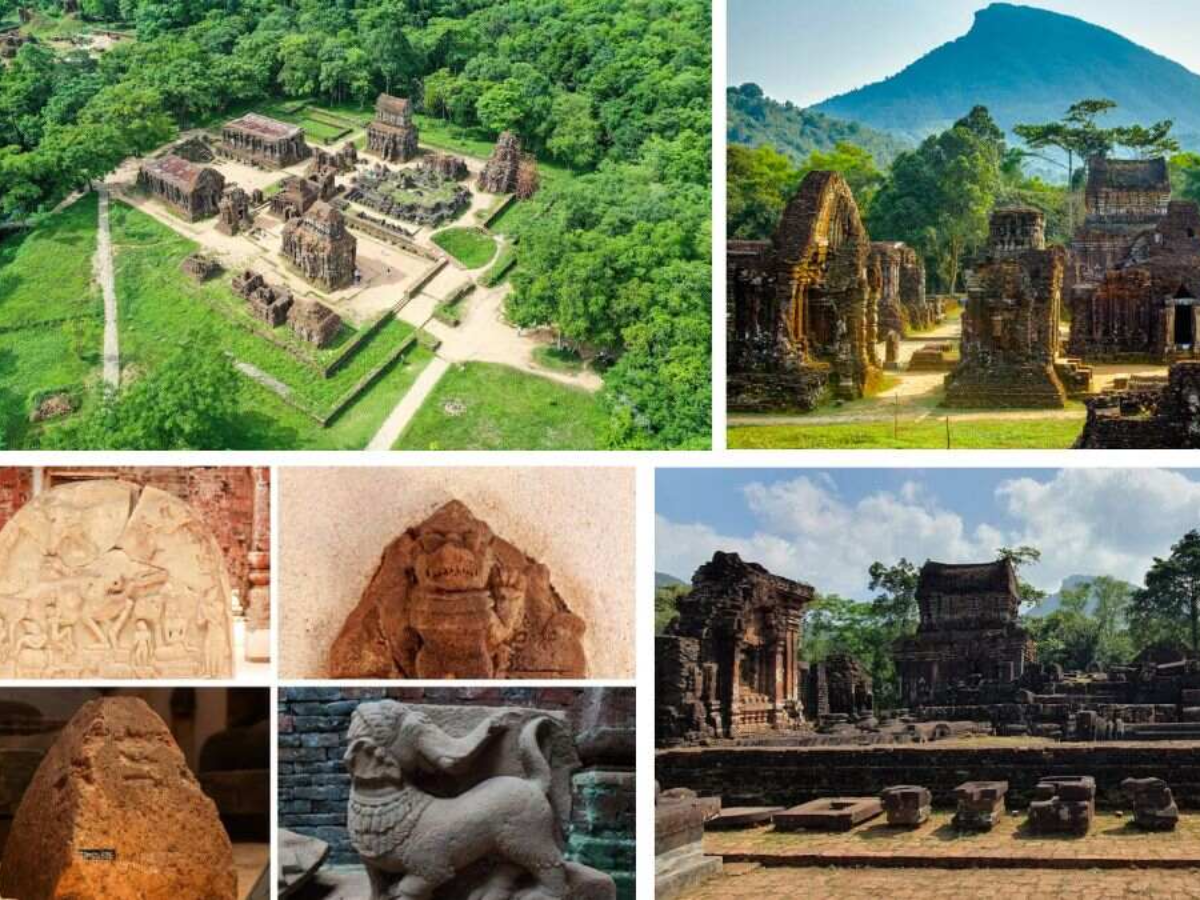
Unlike large temple complexes in Southeast Asia, My Son is modest in scale. Many of the original structures were damaged over time and during the 20th-century war years. What remains today are clusters of red-brick towers set against forested hills, partially restored yet still carrying a strong sense of age and sacred purpose.
The site once included more than 70 temples dedicated primarily to the Hindu god Shiva. Although only a portion survives, the remaining towers reflect distinctive Cham craftsmanship, intricate carvings, and construction techniques that continue to interest historians and architects.
For travelers interested in Vietnam beyond beaches and lantern-lit streets, My Son offers insight into a lesser-known chapter of the country’s past.
2. The architecture and history of the My Son Ruins
The temple towers at My Son were built gradually over several centuries. As different Champa rulers commissioned new sanctuaries, variations in structure and decorative styles emerged, giving the complex a layered architectural character rather than a single unified design.
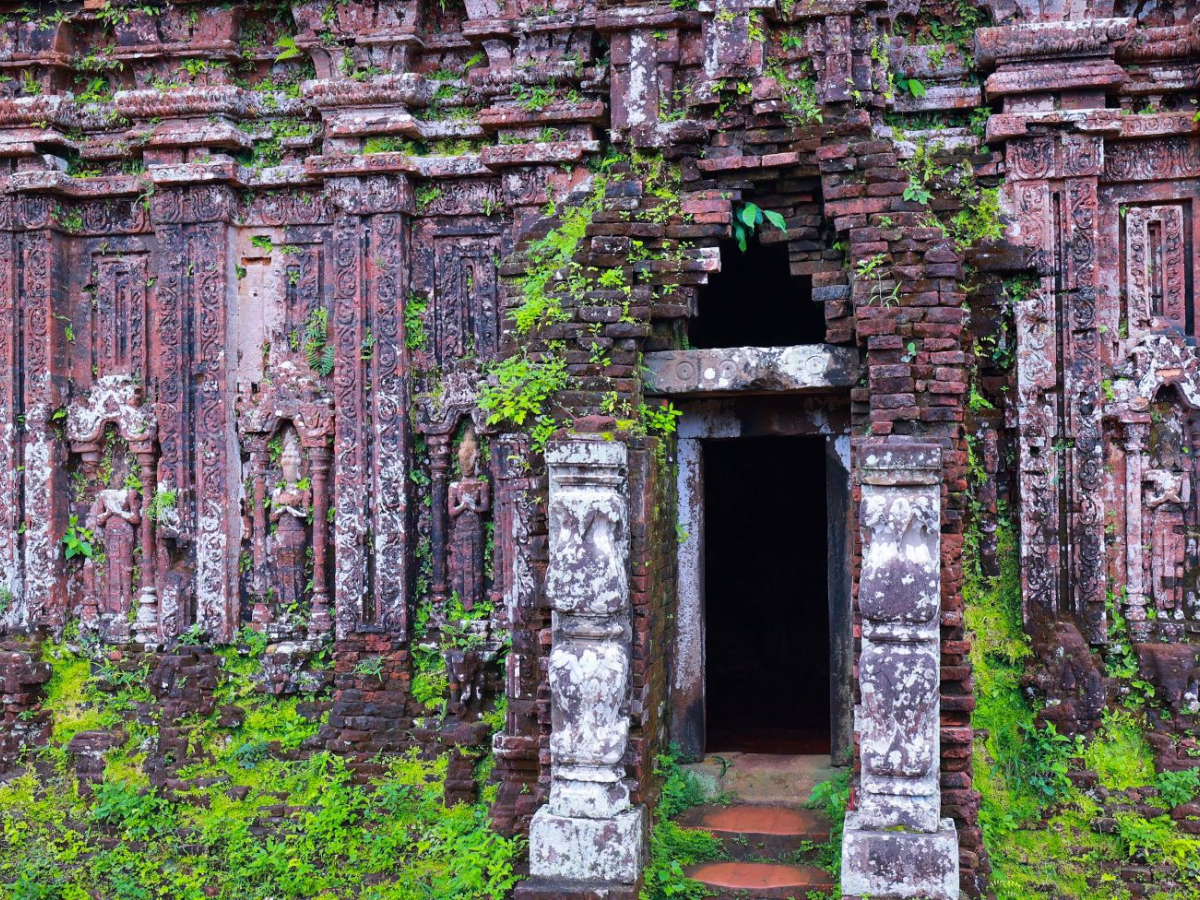
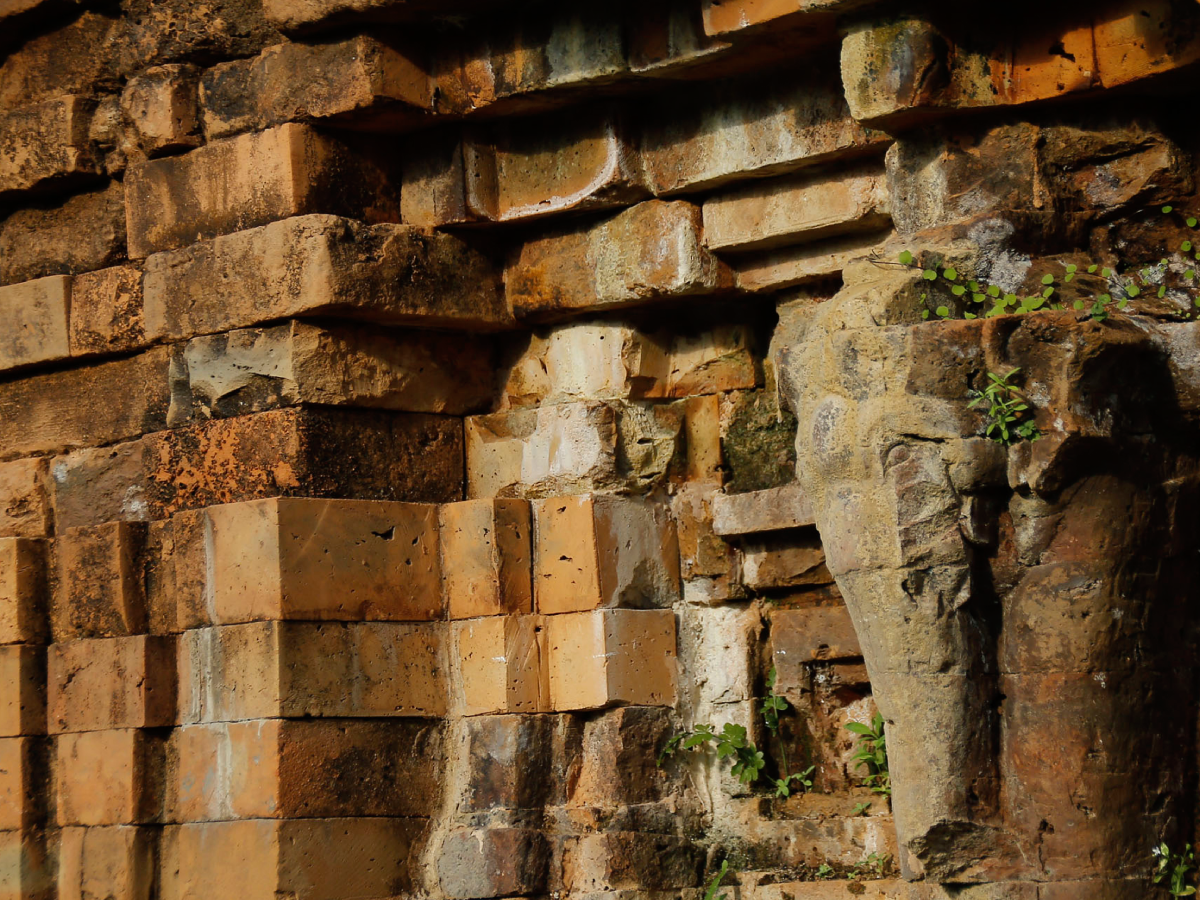
One of the site's most distinctive features is its red brick construction. The bricks were shaped and assembled so precisely that no visible mortar is visible between them, a technique that continues to intrigue researchers. Despite centuries of weathering, many surfaces remain tightly bonded, giving the towers a surprisingly solid presence.
Religious belief influenced both the layout and the details. Most sanctuaries were dedicated to Shiva, and many once enshrined a linga set on a yoni base, symbols central to Hindu worship. Entrances generally face east, aligned with ritual traditions associated with the rising sun. These elements may not stand out immediately, yet they form the logic behind the site’s arrangement.
Sandstone carvings appear on door frames and decorative panels, depicting deities, celestial dancers, and guardian figures. The style reflects Indian influence through Cham craftsmanship, resulting in proportions and motifs that feel distinct from those of other Hindu temple sites in the region.
Instead of feeling like isolated ruins, the towers begin to make sense once their symbolism and layout are understood. What appears modest at first reveals itself as the ceremonial heart of a kingdom that once shaped much of central Vietnam.
3. What you can see at My Son today
A visit to My Son Sanctuary leads through several temple clusters scattered across a green valley. The remains appear gradually along the walking paths, with open clearings separating each group of towers.
3.1. The remaining brick towers
The most prominent features are the surviving brick towers, especially within the clusters commonly identified as B, C, and D. Some structures still retain recognizable entrances and inner chambers. Others stand at lower heights, revealing sections of wall, base platforms, and decorative fragments.
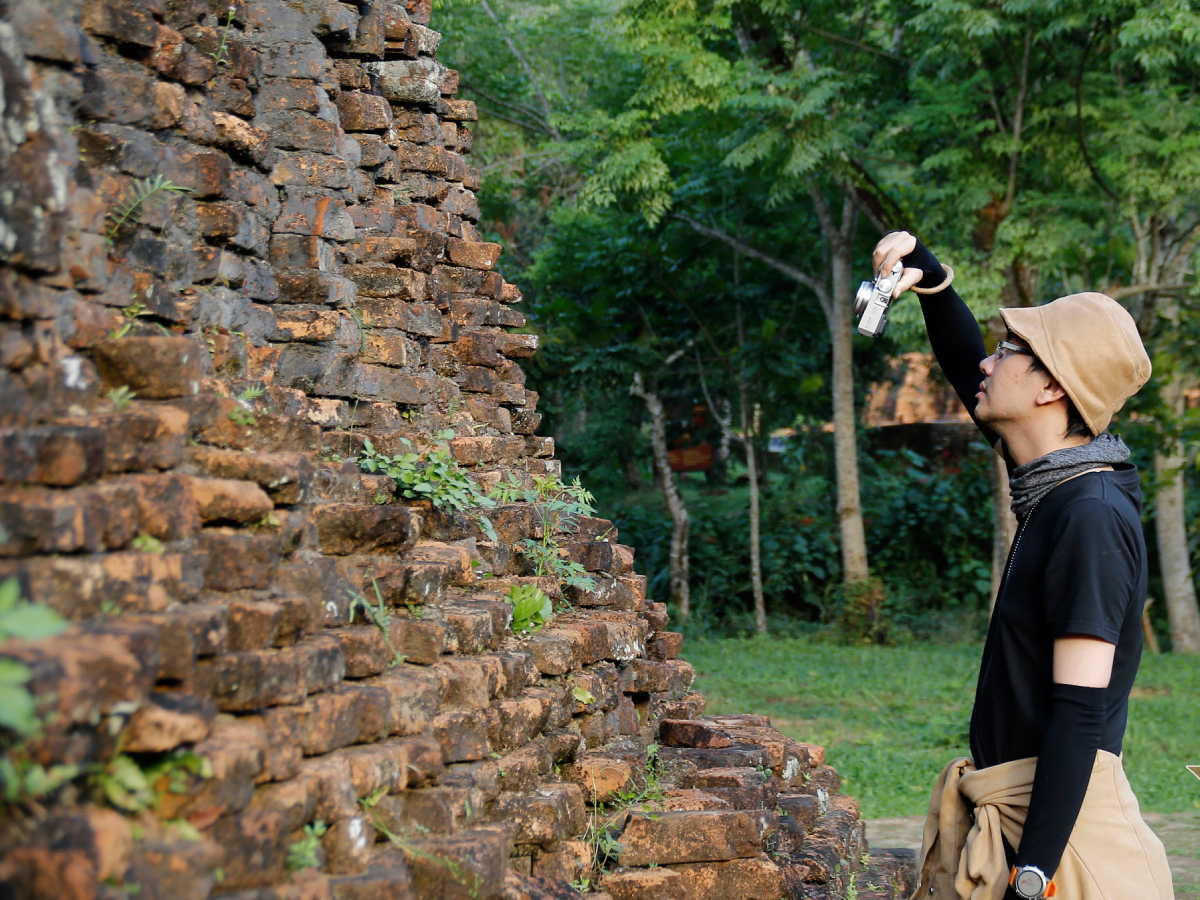
The spacing between towers allows visitors to walk around each structure and examine surface details up close. Carved door frames and brick patterns become visible at eye level, encouraging a slower pace through the site.
3.2. Interior spaces and ritual layout
Several restored towers offer views into the central chamber. Inside, the layout reflects their ceremonial function, with altar platforms arranged along the structure's main axis. Even in an empty state, the proportions of the rooms convey their original sacred role.
Doorways generally face east, consistent with ritual traditions associated with light and direction. This orientation shapes the way the complex unfolds across the valley.
3.3. Cham cultural performances
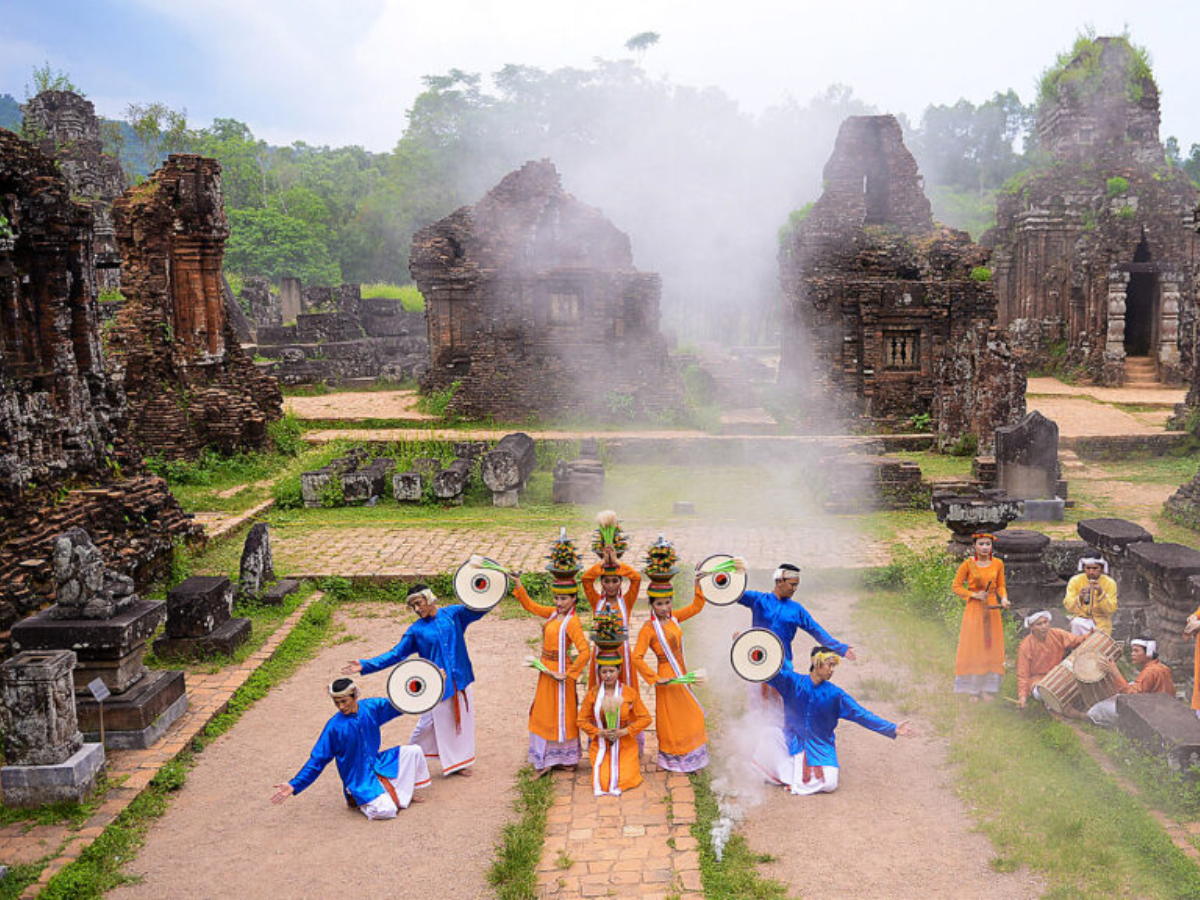
Short traditional Cham dance performances take place near the entrance pavilion several times a day, each lasting around fifteen to twenty minutes. Accompanied by live percussion and string instruments, the dancers move with controlled gestures and deliberate pacing that reflect themes rooted in temple ritual and Champa heritage. The stage is modest, yet the performance adds a human dimension to the visit, echoing motifs seen on the carved stone lintels and decorative panels.
3.4. The valley landscape
The temples stand within a basin framed by low hills and trees. The open landscape allows views across multiple clusters at once. Changing light alters the tone of the brick surfaces through the day, revealing textures and carved details that may be missed at first glance.
4. Opening Hours, Ticket Prices and On-Site Transport
Before visiting My Son Sanctuary, it is useful to be aware of the following essentials.
Opening hours
Open daily: 6:30 am - 5:00 pm
Last entry: around 4:00 pm
Most visits take 2-3 hours
Visitor numbers often increase after 9:00 am as organized tours arrive, so earlier entry generally offers a quieter experience.
Entrance fee
Standard ticket: 150,000 VND per person
Includes access to the ruins, museum entry, and electric shuttle transfer
Payment is made at the main gate. Having some small cash ready can speed up the process during busier periods.
Access and on-site transport
Electric shuttles run continuously between the entrance and the temple valley
Travel time: approximately 5-10 minutes
All exploration inside the archaeological zone is on foot
Walking paths are mostly flat, though exposed areas can feel noticeably warmer later in the day.
Facilities
Restrooms are available near the entrance
Limited refreshment stalls in the front area
No extensive food services inside the ruins
5. Getting to My Son from Hoi An
The journey from Hoi An to My Son Sanctuary covers roughly 40 km and takes about one hour by road. Traffic leaving Hoi An in the morning can slow the first section slightly, though the rural stretch beyond town is straightforward.
Most visitors choose one of the following options:
Private car with driver
Typical costs range from 700,000 to 1,000,000 VND for a round-trip ticket with waiting time included. The driver usually remains on site for two to three hours before returning. This option provides schedule control and eliminates navigation concerns.
Motorbike rental
Daily rental averages 120,000 to 180,000 VND, with fuel additional. The road conditions are generally good. Riders should carry a valid license and check the vehicle carefully before leaving town. Midday heat can make the return ride less comfortable during dry months.
Half-day guided tour
Prices typically range from 450,000 to 800,000 VND per person, depending on inclusions. Transport and entrance tickets are usually bundled together. Departure times are fixed, and time at the site follows a set schedule.
There is currently no direct public bus running from Hoi An to My Son Sanctuary, so independent travelers typically rely on private transport or tours.
Most visits fit comfortably within half a day, allowing a return to Hoi An around midday or early afternoon.
6. The best time to visit My Son
The most comfortable time to visit My Son Sanctuary is generally between February and April. Rainfall is limited, humidity is moderate, and daytime temperatures usually range between 24 and 30°C, making walking conditions manageable.
May through August brings higher heat, often reaching 32–38°C by late morning. The valley offers limited shade in some sections, so early arrival becomes important during these months.
September to November marks the wettest period. October can see sustained rainfall, and occasional flooding in central Vietnam may affect travel plans. Short showers are common, though prolonged rain can reduce comfort on site.
Arrival at opening time, around 6:30 am, provides cooler air and lighter visitor flow. After mid-morning, organized tour groups become more visible in the main clusters. Late afternoon offers softer light, though time on site is shorter before closing.
7. Final thoughts - Is My Son worth your time?
Yes! If you are curious about Vietnam beyond its coastlines and café culture, My Son Sanctuary offers a deeper historical context. The site preserves what remains of the Champa Kingdom’s religious center, and even in its partial state, it reflects a chapter of history not visible in Hoi An’s Old Town.
Expect a compact archaeological site rather than a vast temple city. The surviving brick towers stand in clusters, the walk is manageable, and the visit rarely exceeds half a day. The experience rewards attention to detail and interest in Cham heritage and Hindu temple architecture.
If time in central Vietnam is limited and heritage holds little appeal, My Son may not feel essential. With realistic expectations and an early start, it becomes a worthwhile cultural stop that broadens your understanding of the region.